Walk into almost any kitchen and you will likely notice the cabinets right away. They frame the space, hold everything from spices to pots, and set the tone for the whole room.
But cabinets did not always look the way they do today. Their story spans centuries — shaped by changing homes, new technology, and the way families live. Understanding where cabinets came from helps you make smarter choices for your own kitchen, whether you are remodeling from scratch or simply refreshing what you have.
The Age of Handcraft
For most of human history, kitchens were purely about survival. Food was stored on open shelves, in clay pots, or in wooden chests. There was no such thing as a built-in cabinet — just whatever furniture a household could afford.
By the 17th century, skilled woodworkers began crafting dedicated storage pieces for wealthier homes. Wealthier households featured butler’s pantries with built-in cabinetry to store fine china and silverware. These early pieces were hand-fitted and often ornate, showcasing the cabinetmaker’s talent as much as they served a practical function.
By the 1800s, fine woods like mahogany and cherry became associated with quality cabinetry. But most households still relied on freestanding cupboards and pantries rather than anything built permanently into the walls. The kitchen was still very much a working room, not a showpiece.
The Era of Industry
Everything changed with the Industrial Revolution. Manufacturing made it possible to produce consistent, affordable components at scale. For the first time, cabinets could be made in large quantities rather than one at a time.
One of the most iconic innovations of this period was the Hoosier cabinet, a freestanding all-in-one kitchen unit that combined storage, a workspace, and built-in features like a flour bin and pull-out breadboard. The Hoosier cabinet became a popular kitchen workhorse in American homes during the early 1900s, offering ordinary families a taste of organized kitchen life.
Around this same time, the Arts and Crafts movement pushed back against the excess of industrialized goods. Cabinets in this style featured quality wood and simple, clean lines, emphasizing honest materials and careful construction. This tension between mass production and handcrafted quality would shape cabinet design for decades to come.
The Mid-Century Moment
After World War II, homeownership surged across the United States, and with it came a demand for modern kitchens. Manufacturers responded with standardized cabinetry — consistent sizes, clean finishes, and efficient layouts that could be installed quickly in the new suburbs being built across the country.
Metal cabinets had a moment of popularity in the 1940s and 1950s, valued for their sleek look and easy-to-clean surfaces. Mid-century modern design introduced flat fronts and integrated handles, leaning into a minimalist aesthetic that felt forward-thinking. Formica countertops and pastel color palettes completed the look that many people still associate with vintage kitchen charm.
By the 1980s, the pendulum swung toward customization. Oak cabinets with raised panel doors became a staple, and homeowners began investing in cabinetry that reflected personal style rather than just utility. Glass-front doors made an appearance, letting people display their nicest dishware.
The Dawn of Today’s Styles
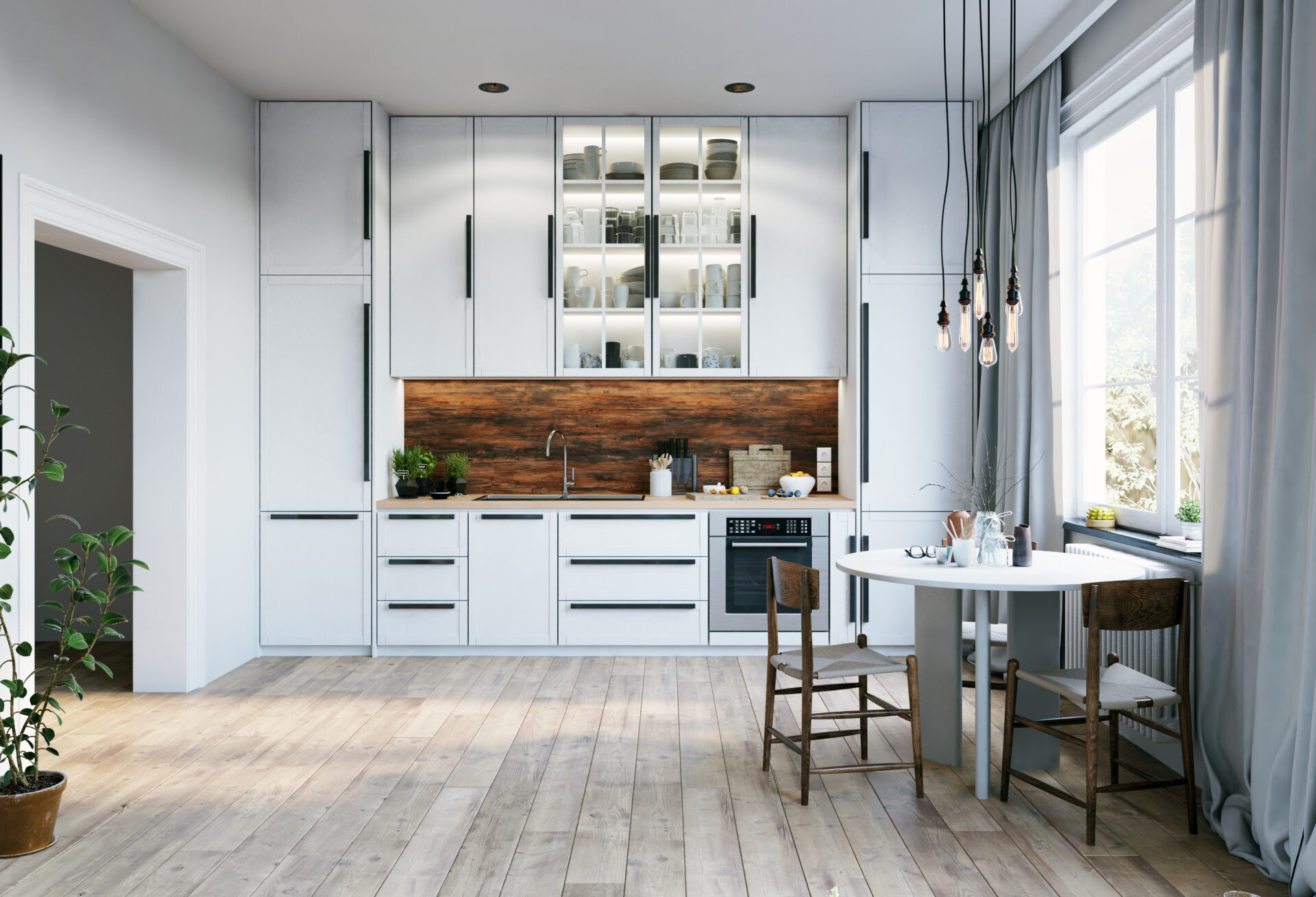
The 2000s brought a shift that still defines cabinet design today. Shaker-style cabinets — with their simple recessed panels and clean proportions — emerged as a go-to choice for kitchens that wanted to feel timeless rather than trendy. White became the dominant color, valued for the bright, open feeling it created in any kitchen size.
Technology began playing a larger role, too. Soft-close hinges, drawer organizers, and pull-out trays turned cabinets into precision storage systems. Cabinets began incorporating features such as cable management and built-in charging stations, reflecting how deeply kitchens had become part of everyday modern life.
More recently, bold colors have made a comeback. Navy blue, forest green, and matte black are showing up in kitchens that want to make a statement. Handleless cabinet doors, mixed materials, and open-shelf layouts have also grown in popularity as homeowners look for spaces that feel more personal and designed.
The Rise of RTA Cabinets
One of the biggest shifts in recent decades has been the growth of ready-to-assemble (RTA) cabinets. These are factory-built units shipped flat, with pre-drilled panels and hardware included, so homeowners can put them together and install them with standard tools. The appeal is straightforward: they cost less, ship faster, and have improved dramatically in quality and style.
As of 2024, over 63% of homeowners in North America favored RTA cabinets over custom installations due to lower costs and quicker delivery timelines. The average pre-assembled cabinet costs 28% more than its RTA counterpart, making RTA a smart option for budget-conscious renovations without sacrificing style.
The RTA market continues to grow. The global RTA kitchen cabinet market is expected to grow from around $10.57 billion in 2025 to $15.55 billion by 2032, driven by rising interest in DIY home improvement, expanded online availability, and growing demand for sustainable materials.
At Cabinet Corner, RTA options are built with the same care as any high-end cabinet — solid construction, beautiful finishes, and a range of styles from classic Shaker to contemporary frameless. Whether you are a homeowner tackling a weekend project or a contractor managing multiple builds, our inventory is ready to move when you are.
The Future of Cabinet Design
Cabinet design will keep evolving — it always has. Sustainable materials are a growing priority, with bamboo, recycled wood, and low-VOC finishes gaining ground as homeowners become more mindful of environmental impact. Smart storage is also expanding, with sensor-ready drawers and built-in lighting channels pointing toward a future where cabinets do even more.
What will not change is the fundamental goal: cabinets that work well, look great, and make the kitchen a better place to spend time. From handcrafted wood boxes in the 1600s to precision-engineered RTA modules today, every era has found its own answer to that question.
Ready to write your own chapter in that story? Explore the cabinet styles available at Cabinet Corner, check out our RTA options, or get in touch with our team — we would love to help you find the perfect fit for your kitchen.